Exploring the World of Iron Stake Plates
In this article I will be giving a brief overview of the information that I could find concerning stake plates. I started out to write this post about my stake bench that I made and have modified over the past couple years. But as I got into in I kept getting more information about the stake plate itself. So now we are looking at the history of stake plates and how they work.
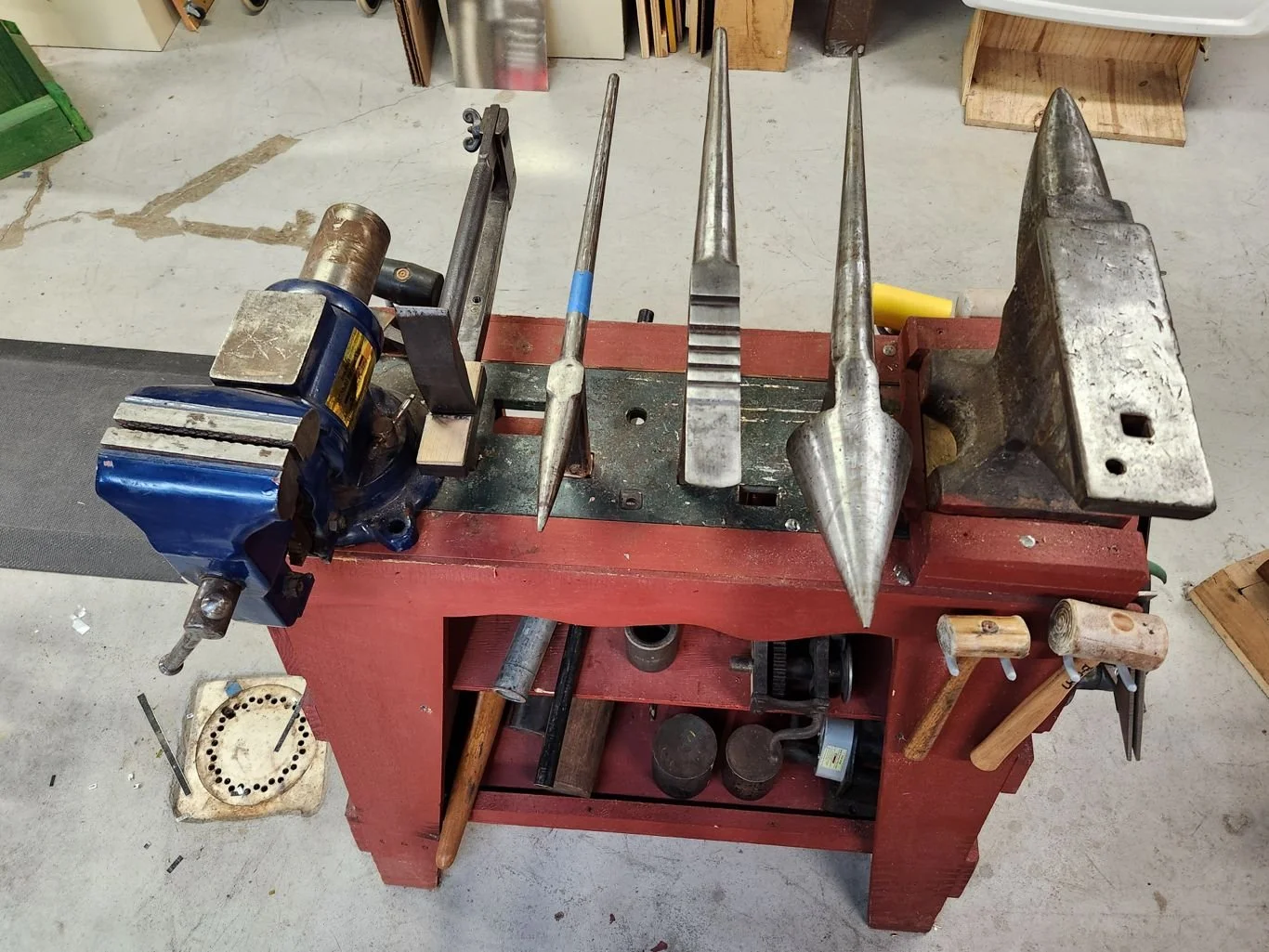
My stake plate is inset in a nice sturdy wooded sawhorse style bench. The bench is made from pine and poplar boards that I had around the shop and is very sturdy. It sets next to my main workbench and holds a variety of stakes, anvils, mandrels and mallets. The HF vice is just waiting on a new home in the shop, or it might stay where it is, not sure yet. Many high school and manufacturing shops had large rectangular work tables with one or more of the stake plates inset into the table edges. I prefer to have a simple open work surface which is why I made the sawhorse style of bench.
It is important to note that these stake plates are meant for stake storage and light tapping. Tinsmithing level hammering is fine, but blacksmith level pounding will break the cast iron. In my experience the bench works best as a place to store and organize tools and jigs. If I am going to do more that a couple pieces at a time I take the stake to the bench and clamp it in a vice. A future project is to add tapered holes in the wood bench top to hold stakes.
A Gathering of Stake Plate History - incomplete to be sure.
The earliest reference to a cast iron stake plate that I have is from the Roys & Wilcox company, which listed “cast iron bench plates” in 1852. Prior to the metal stake benches and even up to today, many shops relied on square, tapered holes in the workbench or stump to hold stakes. Shay Lelegren shows references an 1851 drawing of a wooden stake bench in his book; The Complete Tinsmith & Tinman’s Trade…, pg 205.
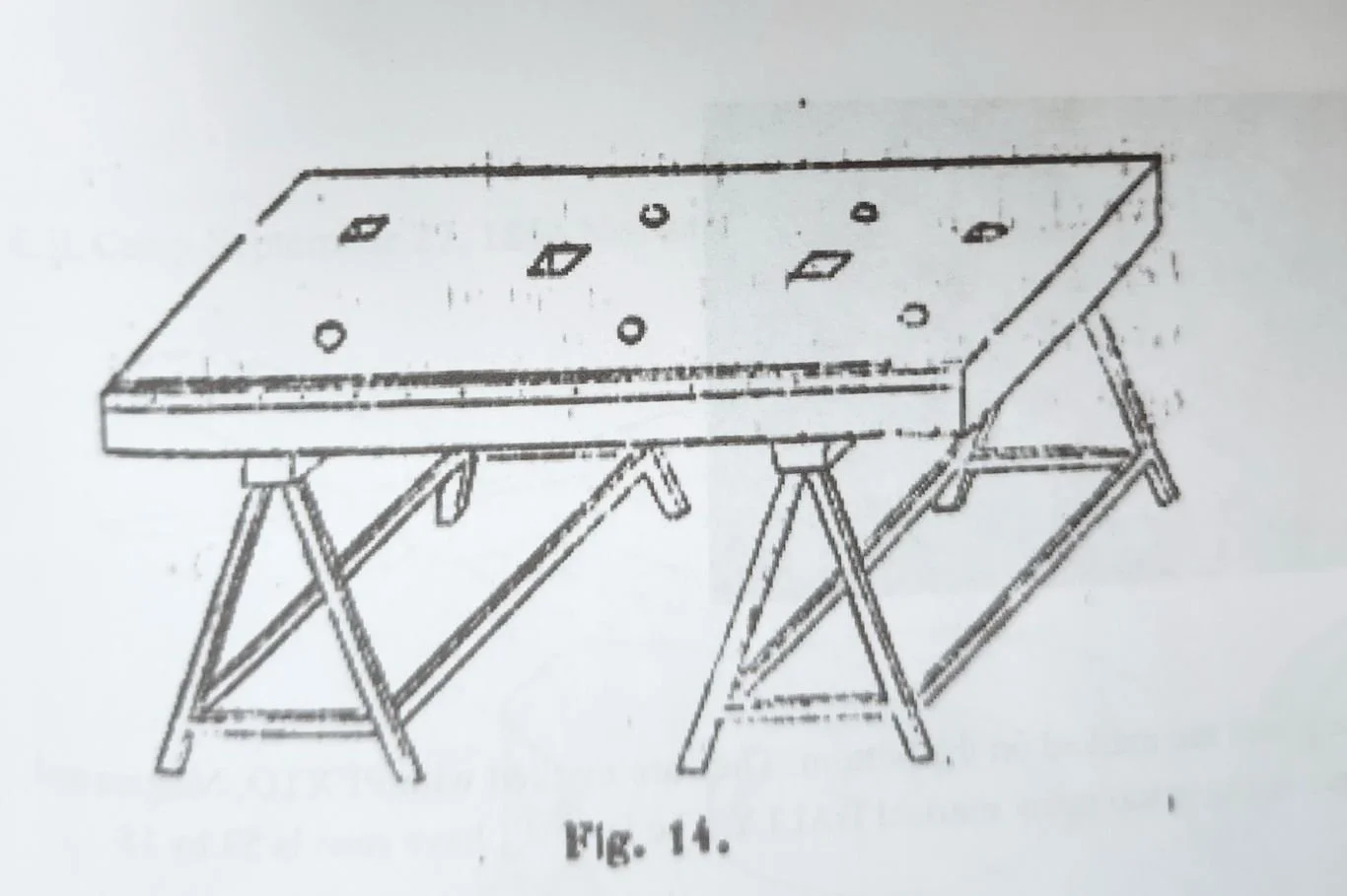
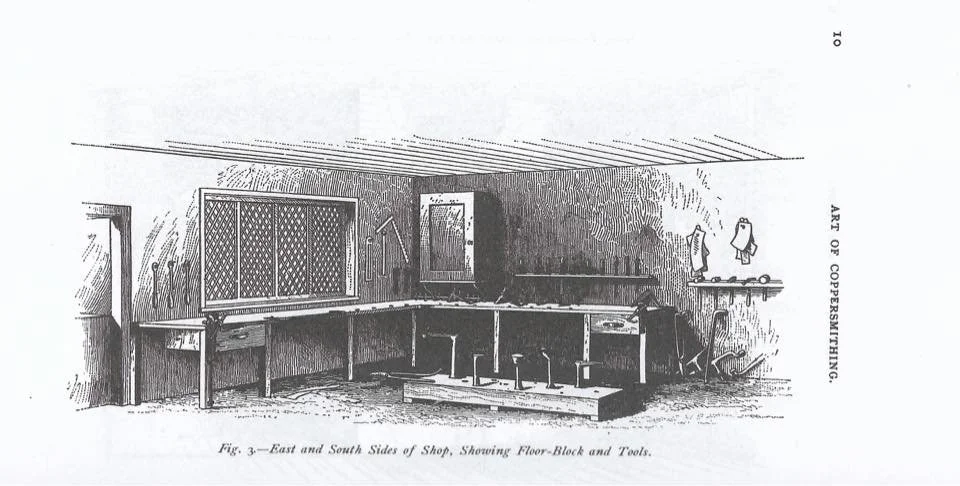
Image of a 19th-century coppersmithing shop in Dorking, Surry England. Source: The Art of Coppersmithing” by John Fuller, 1901. Note the wooden stake bench near the floor and what looks like holes along the workbench edge.
Cast Iron Stake Plates.
Pexto, Peck Stow and Wilcox, Roys and Wilcox, Niagara Machine and Tool Works, Bally, and Roper-Whitney all produced cast iron stake plates over the years.
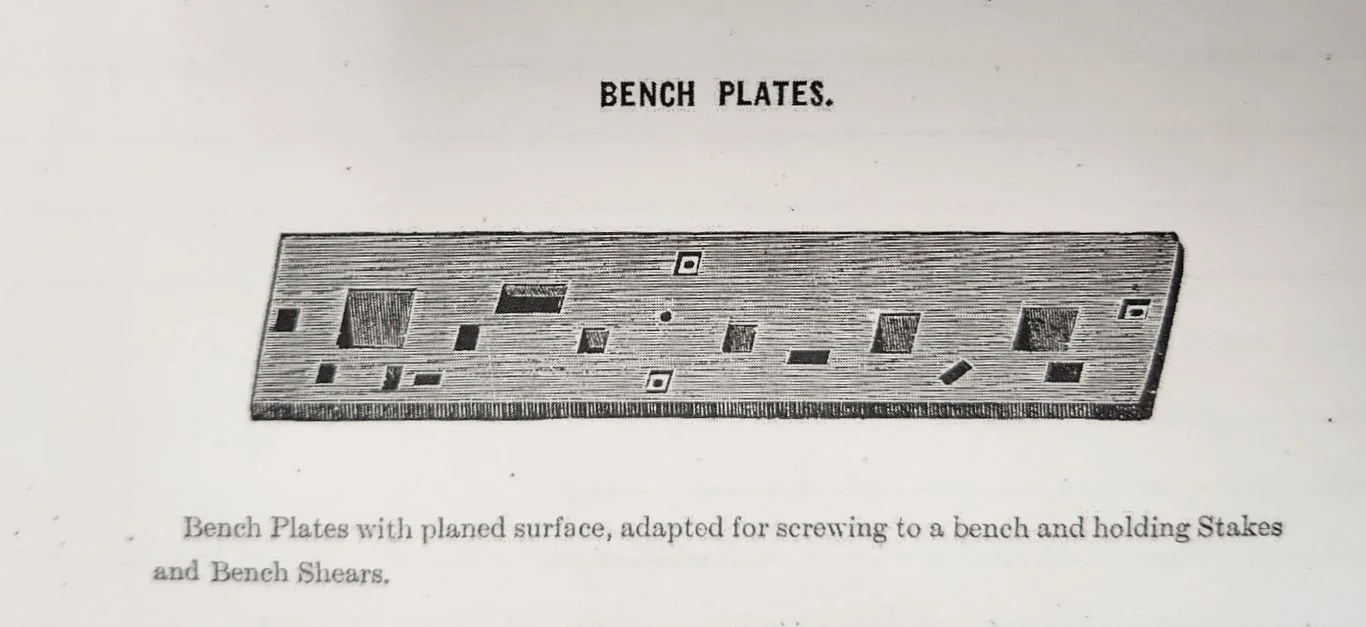
Niagara Stake Plate, 1906
The Niagara bench plate is listed in the 1906 catalog, with planed surface, adapted for screwing to a bench and holding stakes and bench shears. It was sold in three sizes.
No. 0, 48 x 12 inches, which weighed 70 pounds and sold for $9.00
No. 1, 37 x 8 inches, weighing 50 pounds and selling for $5.00
No. 2, 30 x 8 inches, weighing 30 pounds and selling for $3.00
The Niagara plates have the bevels cast in the plate, which reportedly made them better than the Pexto, which have the bevels cast below the plate, making them easier to damage.
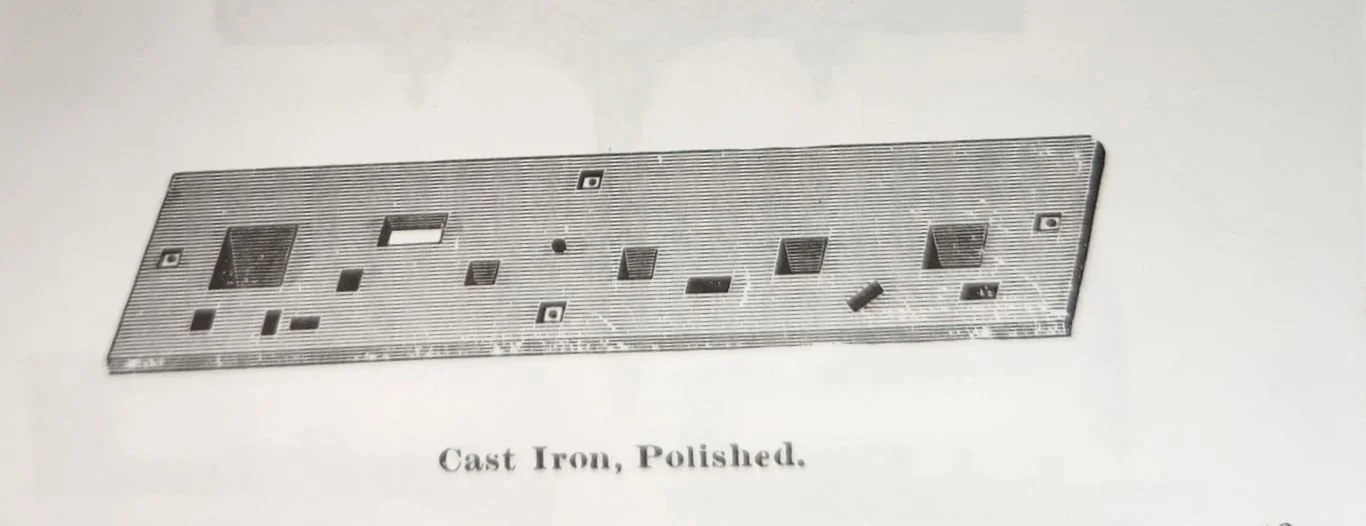
Peck Stow and Wilcox Stake Plate, 1900.
In the Peck, Stow and Wilcox 1900 catalog the following stakes were offered:
No. 0, 48 x 12 inches, 94 pounds, $9.00 each
No. 1, 37 x 8 inches, 50 pounds, $5.00 each
No. 2, 30 x 8 inches, 37 pounds, $3.00 each
Pexto has offered several models from the 50’s to the 90’s.
Model 981 – 30”
Model 982 – 36”
Model 983 -Round . Prior to the early 1970’s ?
The Pexto plates were sometime prone to warping. The better Pexto stake plates have PEXTO cast into them and are usually a model #982.
I think my bench holds one of the Pexto versions because it has the tapered parts cast under the plate as mentioned earlier. A couple of them are broken but still useable.
The Roper Whitney #981 and #982 Bench Plates is still available on the Penn Tool Company website. The 981 is 37.5 x 8” The 982 is 30 x 8 inches.
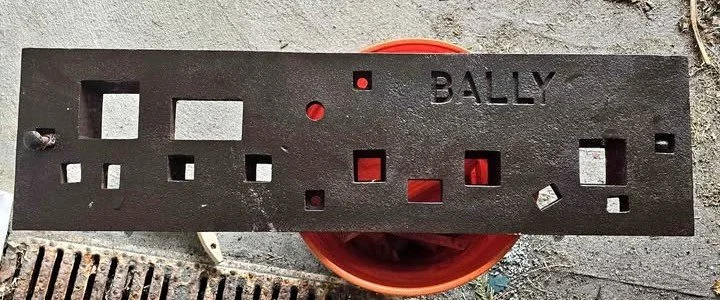
Bally Stake Plate
This image of a Bally stake plate was listed on Facebook Marketplace. I could not find any details about this plate.
The Bliven Meade & Company Illustrated Catalog of 1864 lists these stake plates on page 272.
No. 1 – cast iron bench plate, $5
No. 2 – cast iron bench plate $3
A stake plate is a very handy thing to have in the shop. I don’t remember where I found mine exactly, but I did not pay much for it. Some guys have been lucky and were given one or picked one up cheap at scrap prices, or got lucky at the auction. I have seen them listed online for everywhere from $300-$1300.
I am sure there is much more to be learned in the stake plate rabbit hole. I would be very happy to hear any more information that you are willing to share. I want to especially that the following people that added information to this post from within the Tintinkers.org and the Historical Tinsmithing Facebook pages: Timothy Miller, Tubal Cain, Marty Kruszynski, Troy Sowers, D.W. DeWitt, Iwan Bob Geldart, Jason Winterrowd, Gary Makey, Mark Umberger, Robert Stone, Richard Eckert, Tim Lunceford, Karl Joseph, and Shay Lelegren.