Early lanterns in art, pre-1620.
One of the questions I get asked most often is what time period does a lantern represent. The question I get the most is “Do you ever cut yourself?”. Dating period correct tin lanterns is hard because there is so much overlap in styles and construction methods over the past 500 years or so.
In the next series of posts I am going to attempt to present a chronology of tin lanterns in approximately 20 year chunks. All of the images that I will use will be either from a painting, etching or drawing created in the chosen time period. It is important to point out that this is not a foolproof method. For example, if a painting depicts John the Baptist carrying a tin lantern that doesn’t prove that biblical folks were wandering around with medieval tin lanterns. It just means that the lantern shown was known to the artist at the time the painting was created. Also, if the exact same lantern shows up in six painting by the same artist it doesn’t prove that the lantern was common or popular necessarily. Maybe the artist only had one lantern as a model? So what I am referencing is that a particular lantern pattern was being represented at the time the artwork was created.
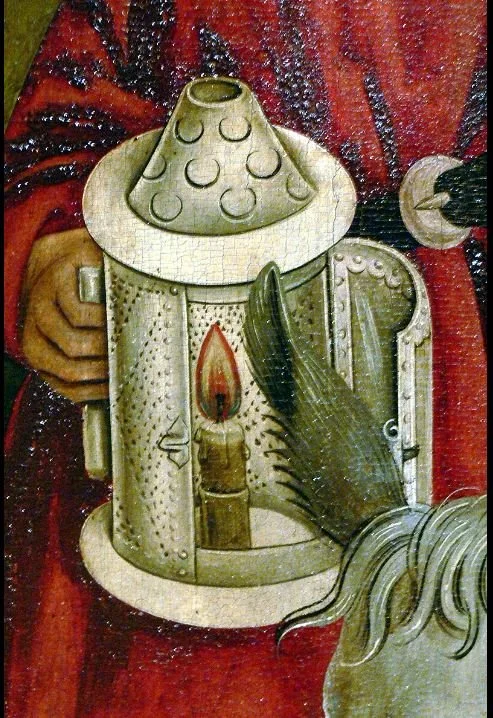
Source: Oberhaussmuseum (Passau), Detail, Nativity, 15th century, Lantern in the hand of Saint Joseph.
This first lantern from the 15th century points out one of the difficulties in understanding and recreating early period metal lanterns. This painting was created when tinplate was relatively new. More often than not lanterns from this period are described as being made from “sheet iron”. In some cases that seems to mean sheet iron dipped in tin, but often seems to mean just plain iron sheets. In this image the rivets used to hold the body together are clearly shown. The technique of soldering bare metal was well known by this time so it could have been made with a combination of riveting and soldering. It’s hard to say with any certainty just based on the painting.
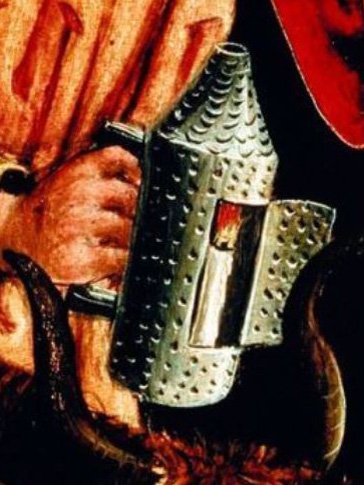
Medieval Lantern with scalloped punches. Unknown source. Image was sent to me in 2023.
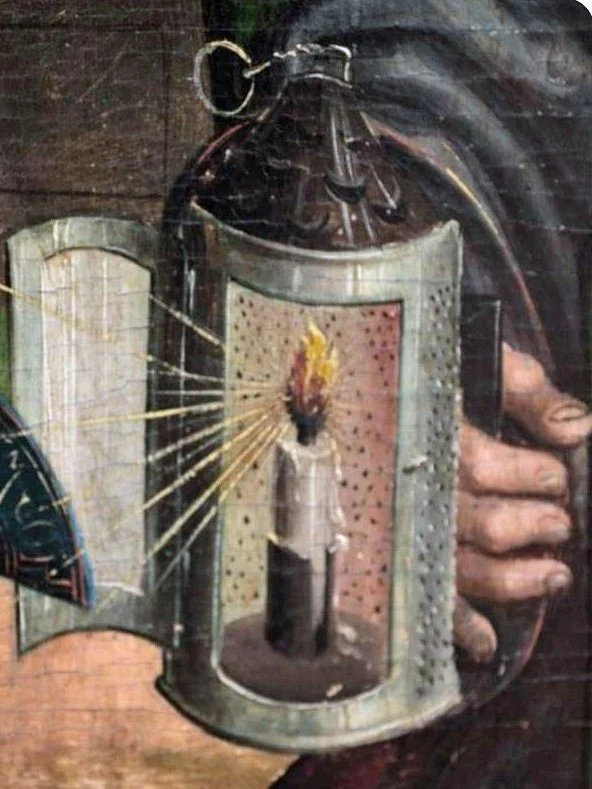
Medieval lantern with scalloped punches. Unknown source. This image was sent to me in 2023.
Notice in this detail from an unknown painting, that the artist did not paint any rivets. Does that mean the lantern was soldered? Or, did the artist just not think it was something important enough to include? Another point to notice in all three images so far is that the doors are open. Anyone who uses a period lantern with mica or horn in the doors knows how little light projects out when the doors are closed. These lanterns also get hot on top if they are left lit for long periods of time. It seems to have been a common idea to leave the door open if practical to let more light and heat out.
The next few images show more lanterns from this early period. I find it interesting that they are all round. And notice how many have the door open. I think that is an important detail to keep in mind the next time I want to have a lantern burning for a long period of time.
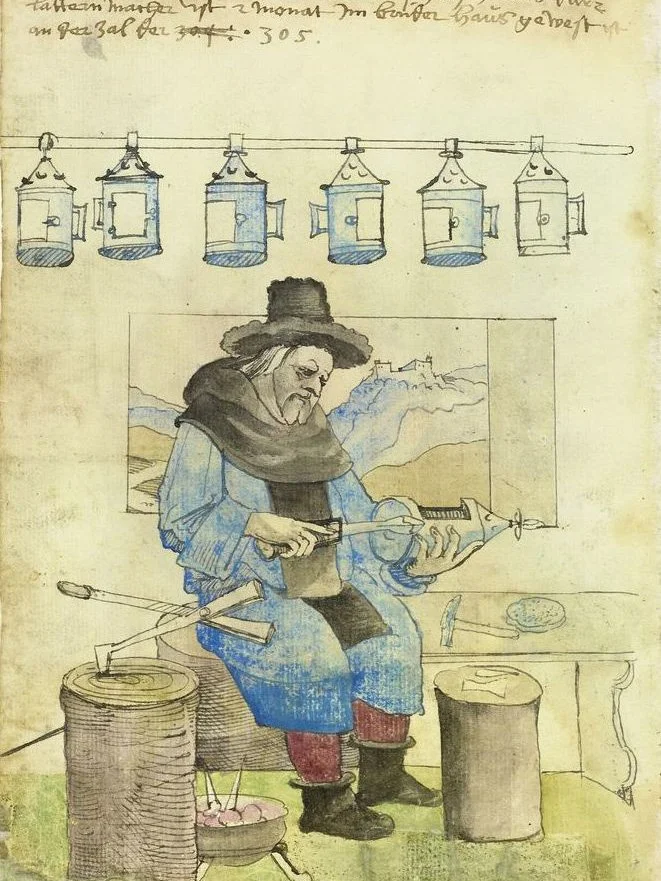
Source: neurnberger-hausbuecher.de, The House Books of the Nuremberg Twelve Brothers Foundations, Amb. 317.2, Folio 155 verso (mendel 1). 1536.
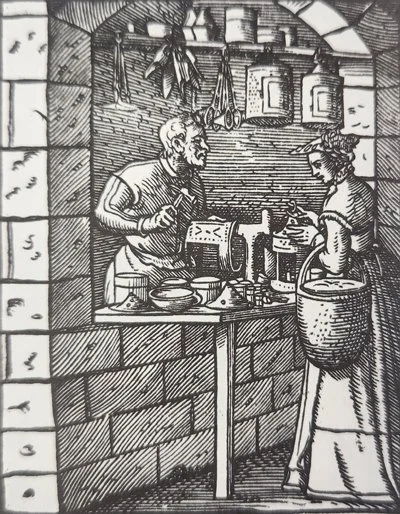
Detail from “The Lantern Maker”, from The Book of Trades, 1578, by Jost Amman and Hans Sachs, page 88.
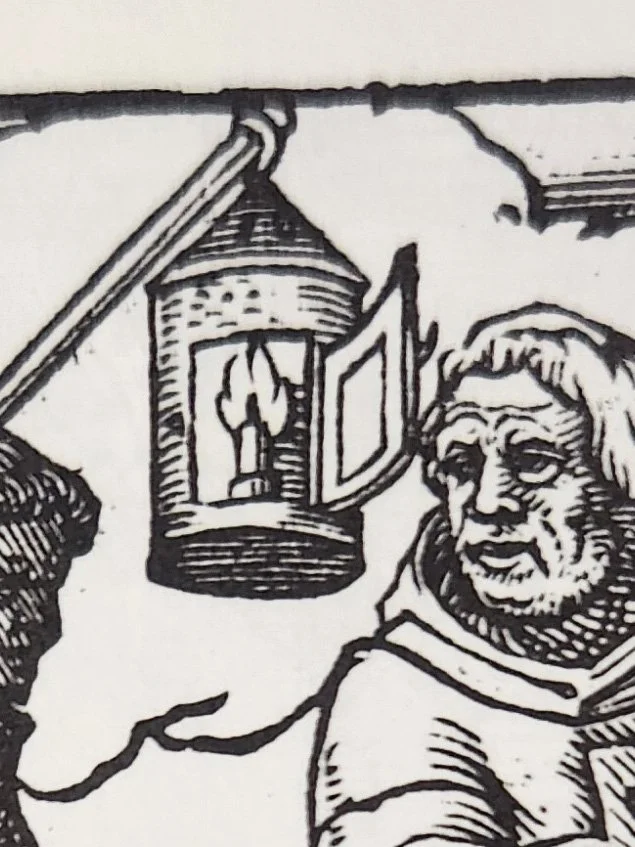
Detail from “The Priests”, The Book of Trades, 1578, by Jost Amman and Hans Sachs.
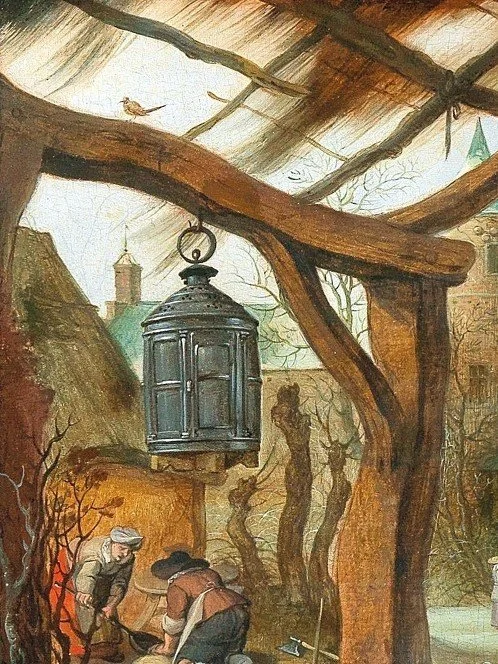
Detail from “An Allegory of Winter”, Sebastian Vrancx, Flemish, 1608. Source: Public Domain, private collection.
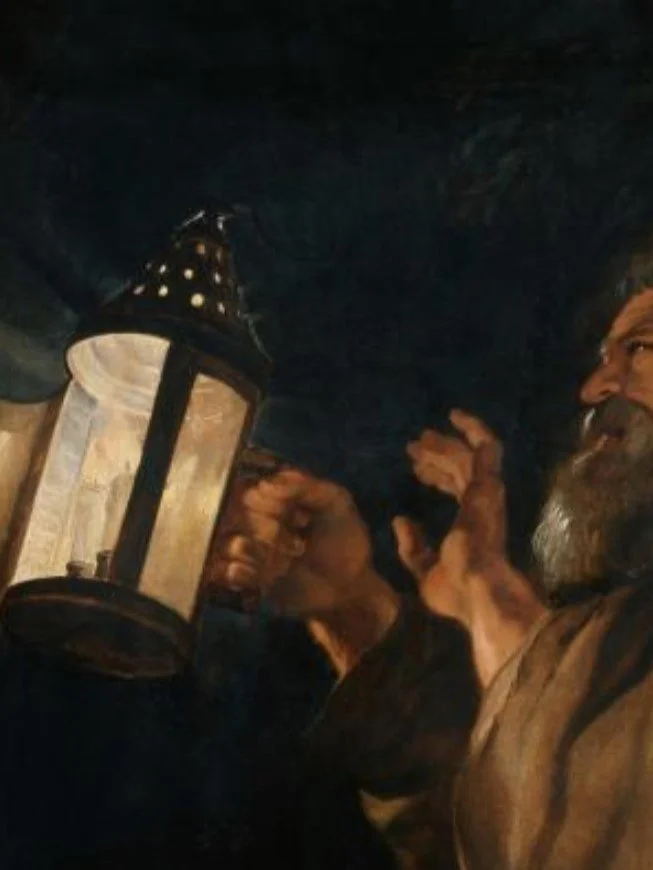
Detail from Descent From The Cross - triptych, by Peter Paul Rubens, 1612-1614. Source: Cathedral of Our Lady, Antwerp Belgium.
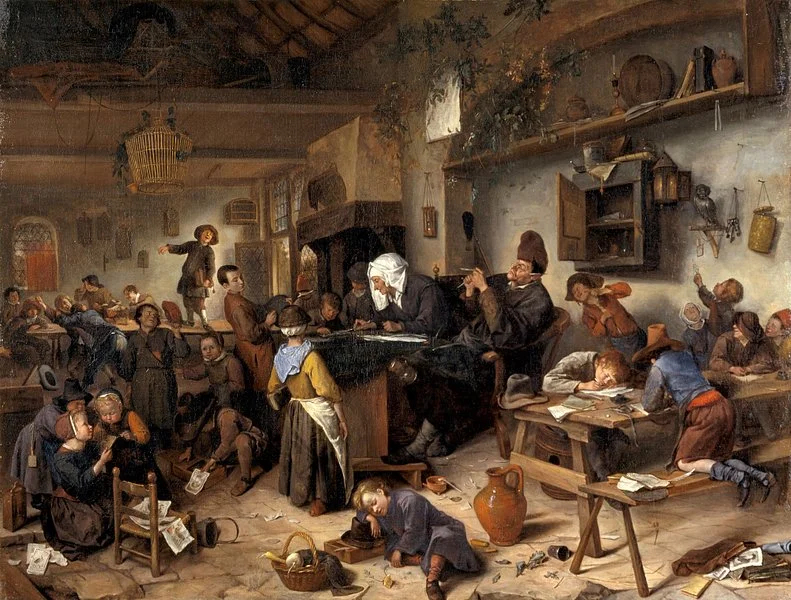
An Jansz de Velde III, Haarlem, 1619-20.
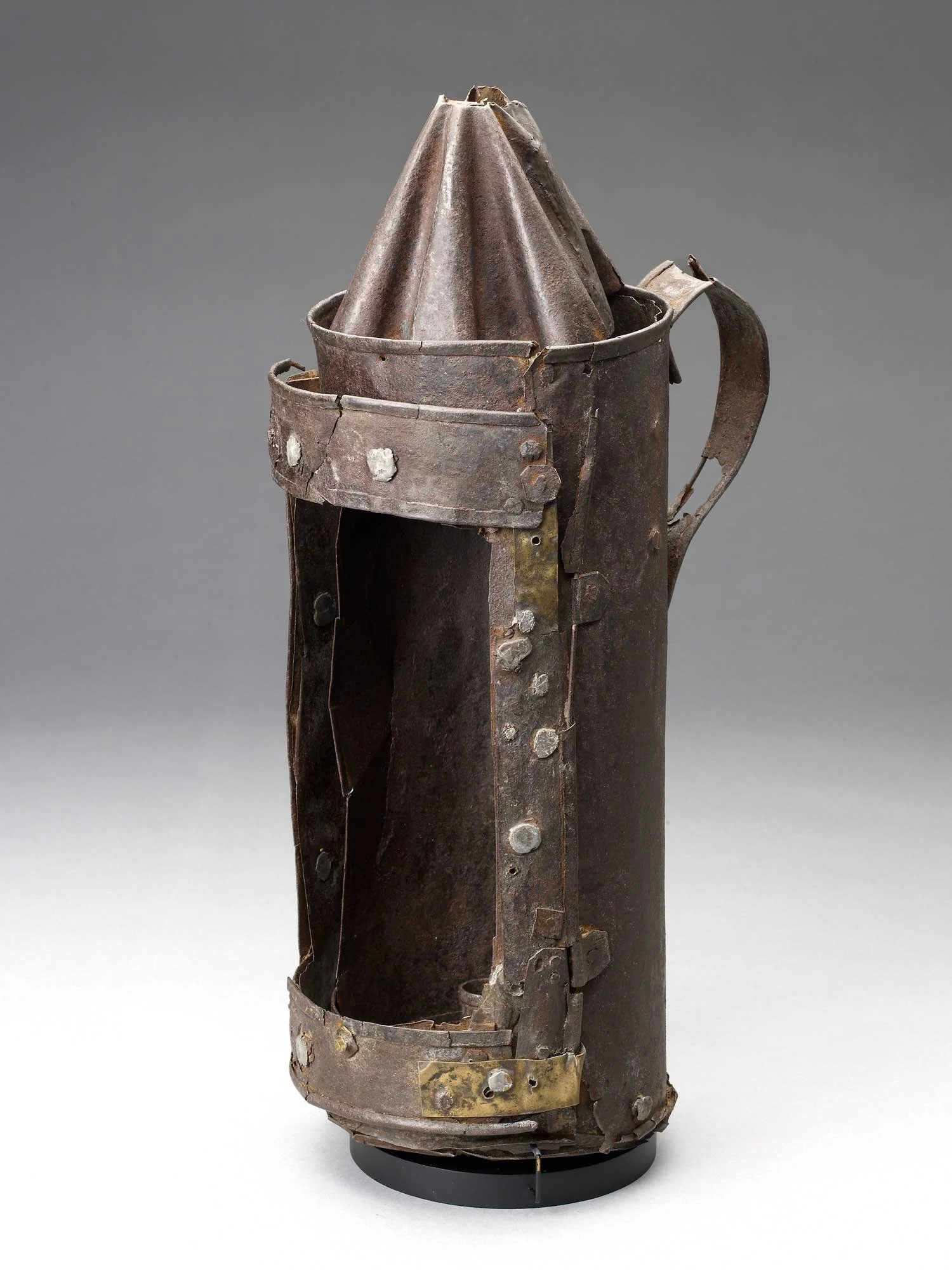
“Guy Fawkes Lantern”, 1605, from the collections of the Ashmolean Museum collection. Image used with permission.
Next time I will be discussing tin lanterns that were being depicted between 1620 and 1640. I would be happy to hear any ideas, thoughts, or documentation that you have concerning tinsmithing or the pre-1620’s. Leave a comment below.